

Ordinary objects Satomi collected throughout the years.
Satomi often finds inspiration in ordinary objects. A texture, a surface, or a familiar material might catch her eye and make her want to reach out and touch it. From there, her mind begins to wander…
How was it made? How long did it take before it took its final form? How many hands were involved in making it?
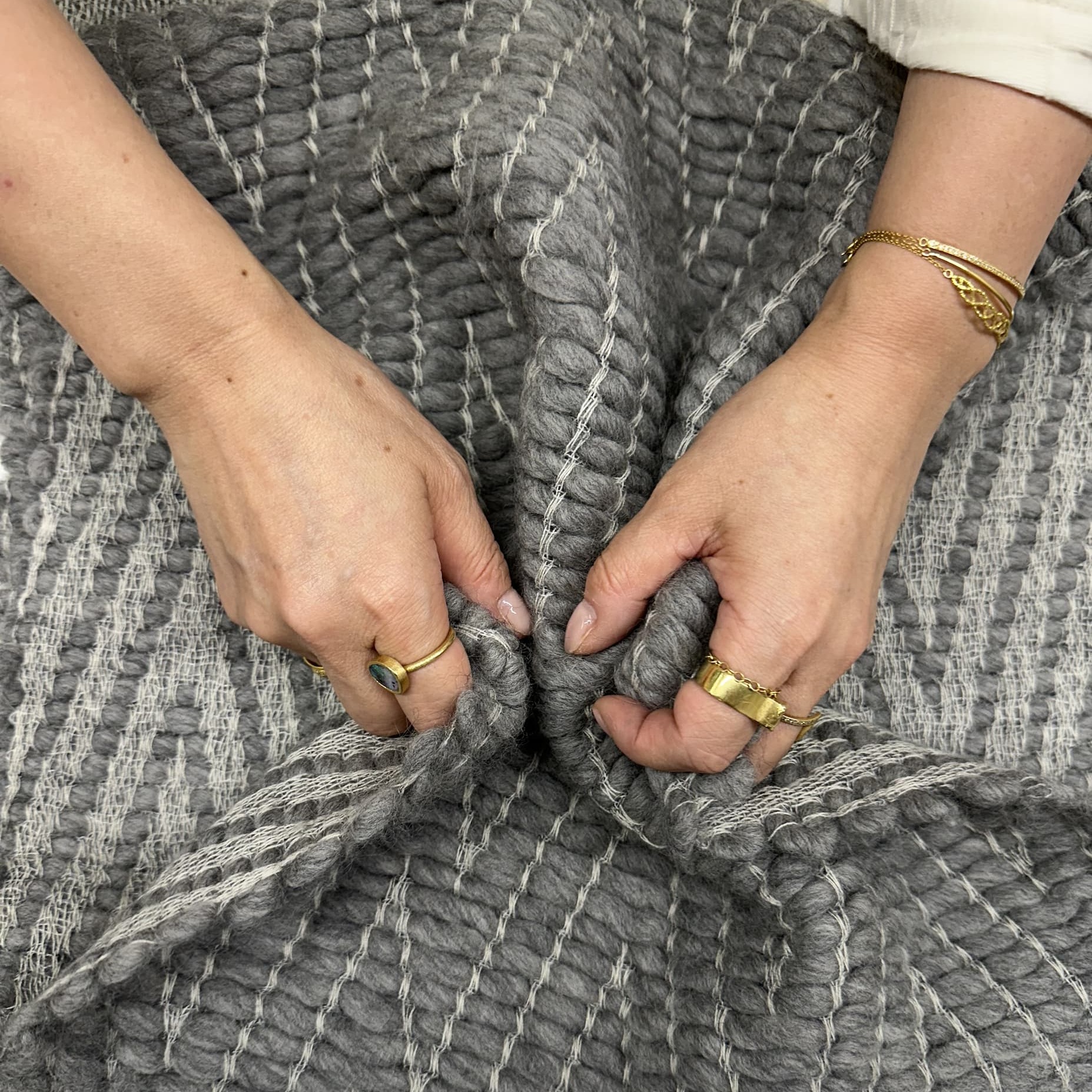
Scarf by Hiroko Takeda.
Satomi has long been fascinated by textiles and other handmade objects, not only for how they look or feel, but for how they come to be.
A single thread can become a scarf through the repeated work of human hands. Narrow strips of material can be woven together to become something entirely new. Small individual pieces can be joined, layered, and accumulated, gradually transforming through technique, time, and the movement of the hands.
For Satomi, the time and human effort devoted to making something is, in itself, a form of luxury.
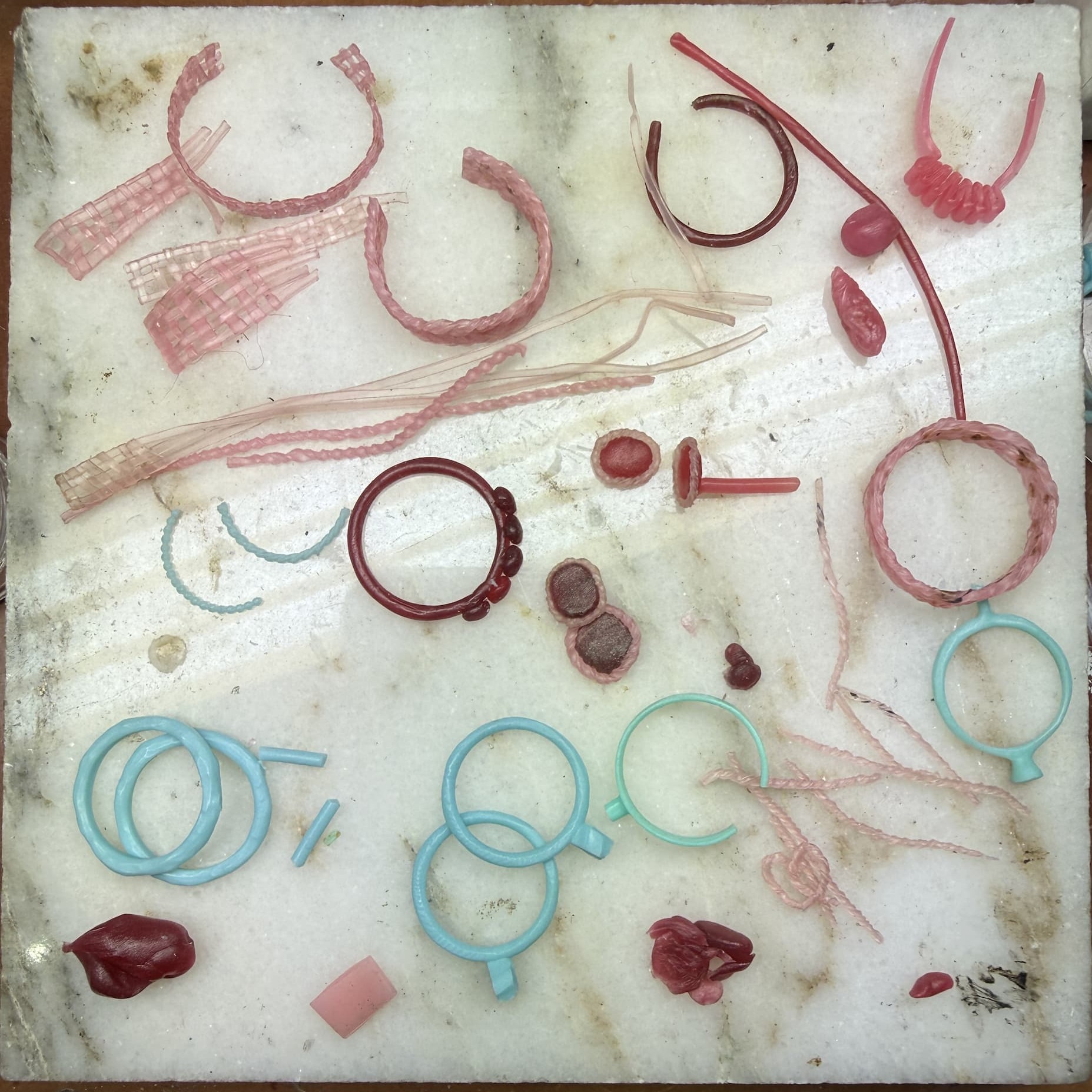
Satomi's exploration with sticky wax.
For Autumn/Winter 2025, Satomi's exploration with wax introduced an element of chance. The material did not always respond exactly as expected, allowing unexpected forms and expressions to emerge through the interaction between her hands and the wax.
Autumn/Winter 2025 Collection.
For Autumn/Winter 2026, Satomi began exploring this idea in a new direction.
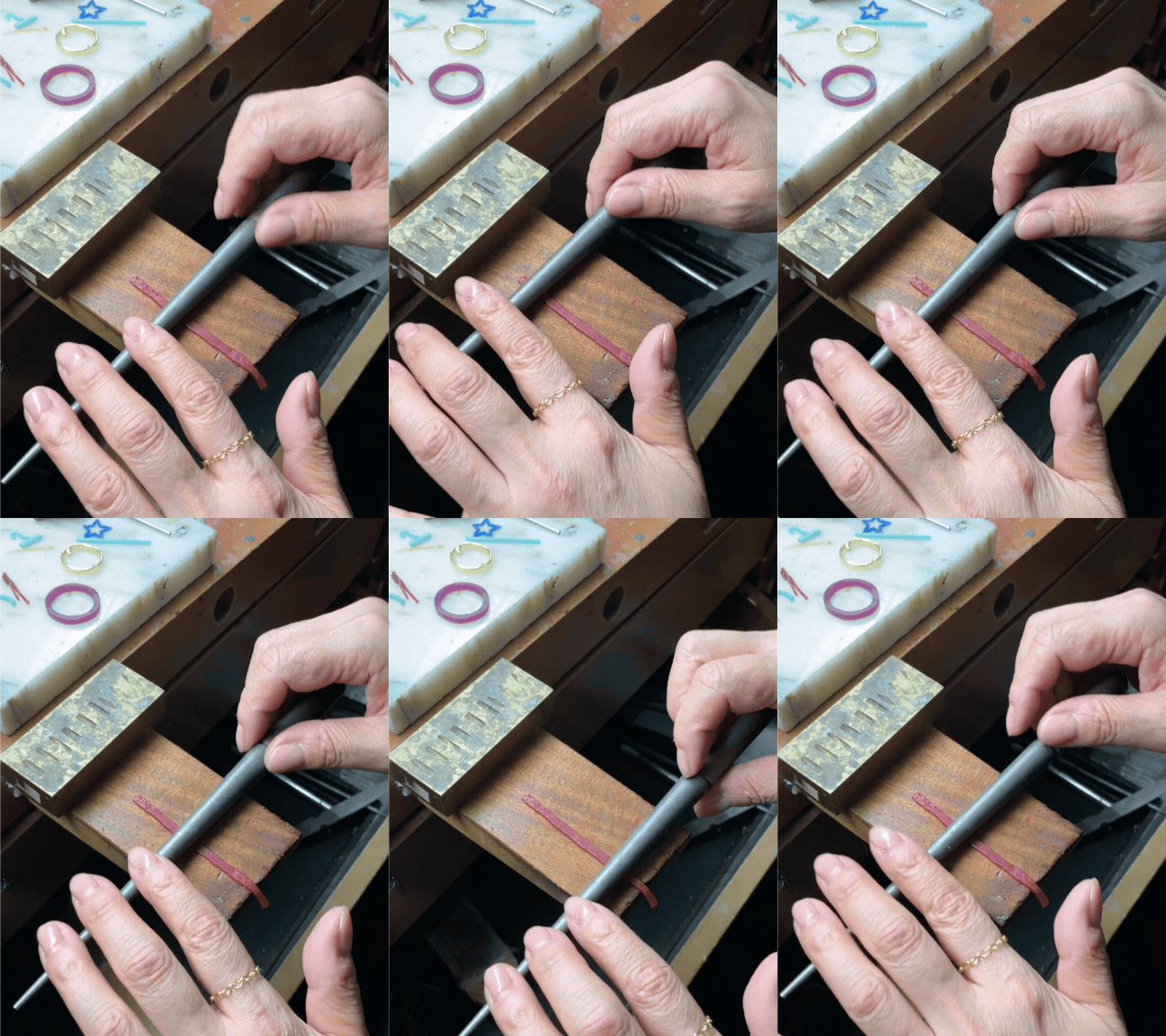
Inspired by the way simple materials can transform through repeated acts of making, she began cutting, folding, weaving, layering, and joining sheet wax by hand.
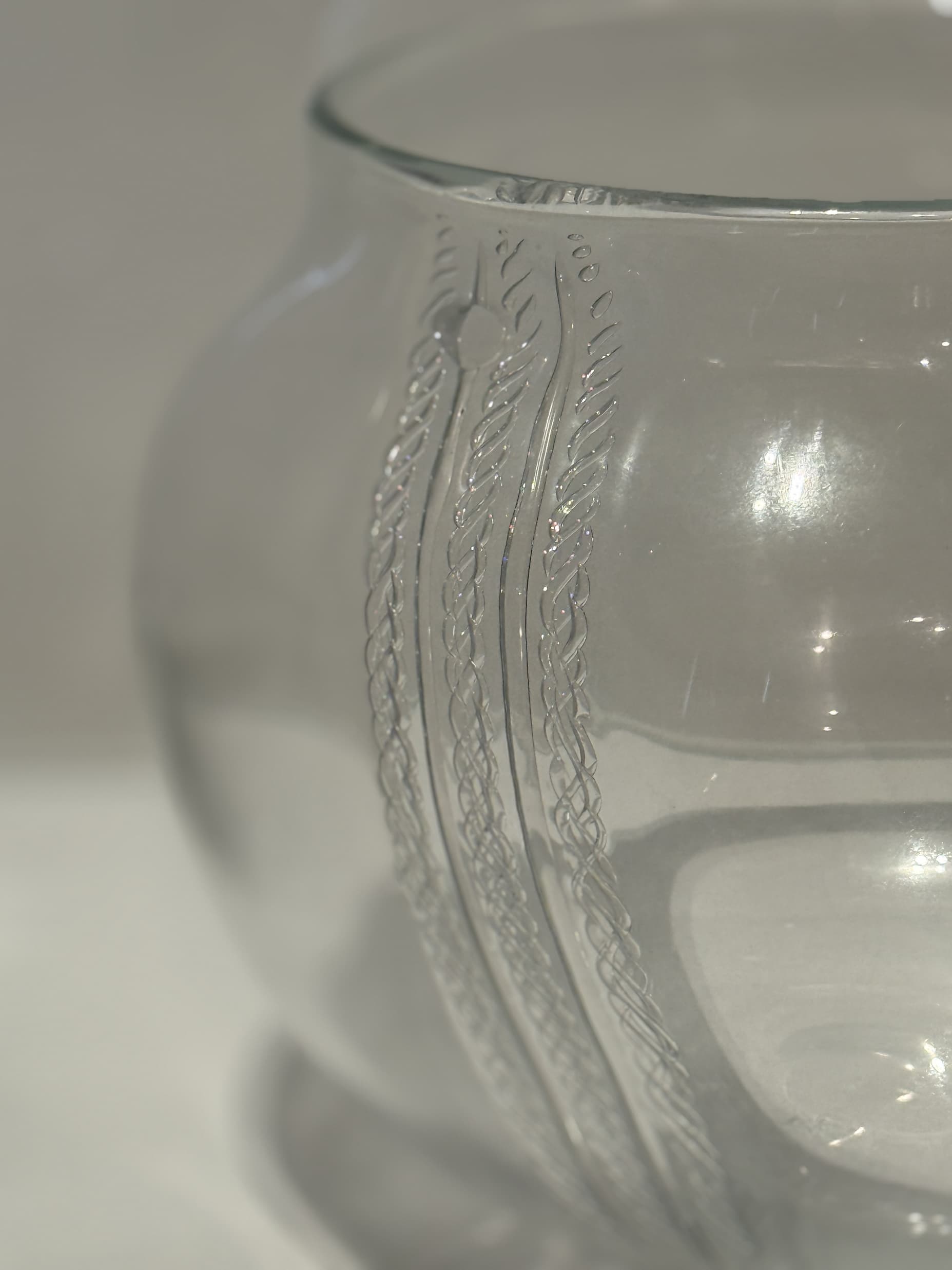
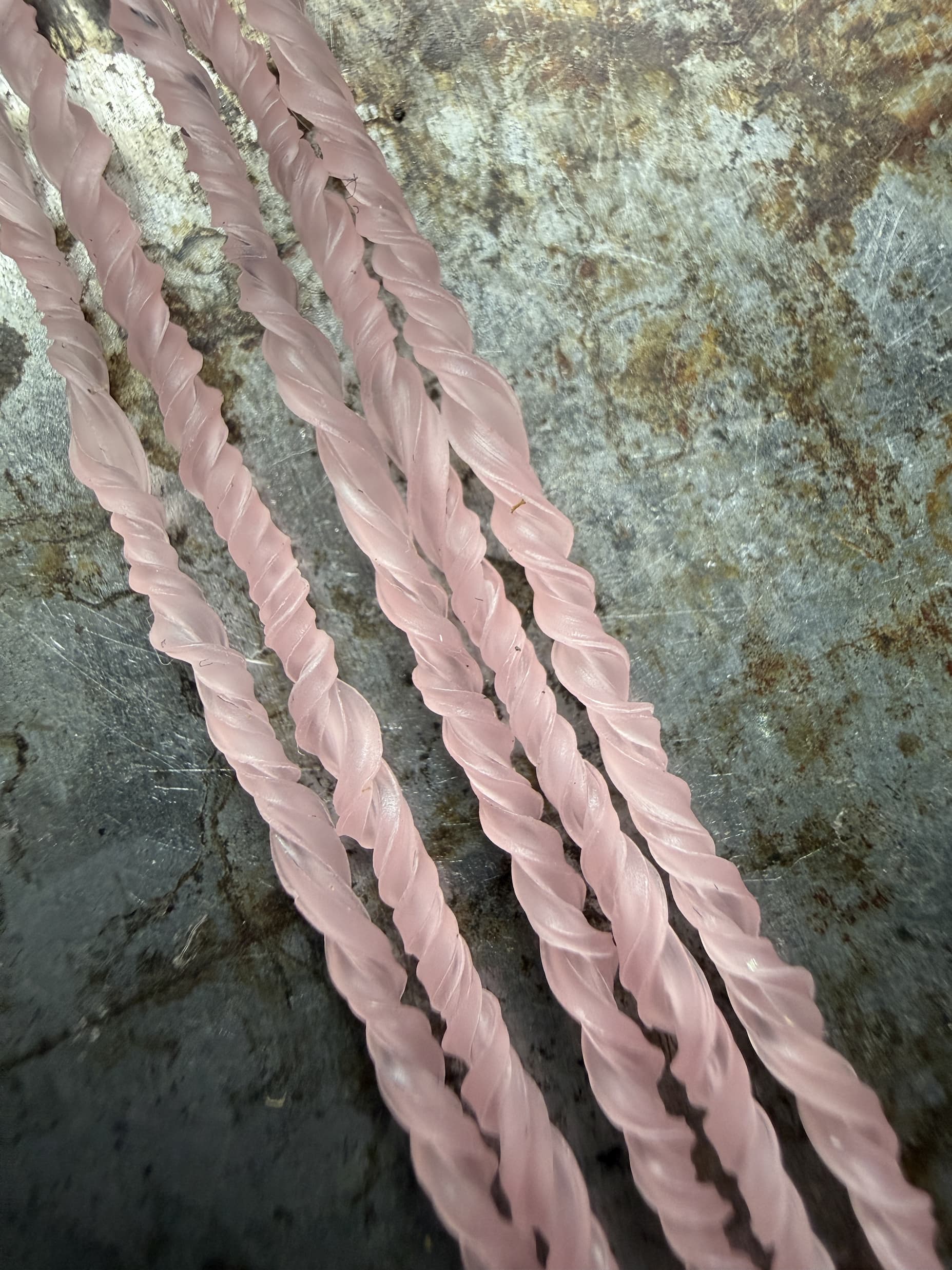
A piece from the Murano Glass Museum. Satomi's work.
For Satomi, making and designing have always been inseparable. As she works with a material, she observes how it responds, allowing unexpected discoveries along the way to become part of the design itself.
Through cutting, folding, weaving, layering, and joining, a simple material gradually takes on an entirely new form.
It is this process of transformation—the way material changes through time, touch, and repeated acts of making—that lies at the heart of Autumn/Winter 2026.